Proper Tongue Posture: What It Is and Why Every Parent Should Know
Why Resting Tongue Position Matters — and Why Myofunctional Therapy Is Becoming Essential in Modern Speech Therapy
If you’ve spent time in the pediatric therapy world lately—especially within speech-language pathology—you may have heard a new term circulating more and more: orofacial myofunctional therapy or MYO for short. And alongside it, you may hear clinicians talking about “resting tongue posture” or asking questions like:
“Where does your child’s tongue sit when they’re not talking?”
“Does their mouth rest open?”
“Is their tongue low, forward, or against their teeth?”
To a parent, this can feel confusing or even surprising. Many assume the tongue is only something we think about when eating or speaking. But in reality, what the tongue does the other 23 hours of the day has a huge impact on speech clarity, feeding, oral development, airway health, and overall function.
This blog post breaks down exactly why resting tongue position matters, why myofunctional therapy is becoming essential, and why so many SLPs are referring for MYO evaluation or incorporating MYO into treatment.
What Is Resting Tongue Position?
“Resting tongue posture” refers to where the tongue naturally sits when a child is not actively speaking, chewing, or swallowing. Ideally, the tongue should rest:
Gently sealed behind closed lips
The tip of the tongue resting on the alveolar ridge (the bumpy spot right behind the upper front teeth)
The sides of the tongue lightly suctioned to the palate
The teeth slightly apart
Breathing through the nose
This position supports multiple systems: breathing, swallowing, speech production, and facial growth.
But many children do not have this ideal posture. Instead, their tongue may rest:
Low in the mouth
On the bottom teeth
Forward between the teeth
Against the lips or cheeks
With the mouth hanging open
Accompanied by chronic mouth breathing
This is called low tongue posture or oral resting posture differences, and it is a common reason SLPs refer for myofunctional therapy.
Why Does Resting Tongue Position Matter So Much?
Resting posture impacts three major areas:
1. Speech Development
The tongue’s resting position influences muscle tone, stability, and accuracy, which all contribute to speech sound production.
A tongue that rests low often leads to:
Distorted /s/ and /z/ (“slushy” sounds)
Lisping (tongue pushing forward or sideways)
Difficulty stabilizing the tongue for r, l, sh, ch, j
Poor dissociation (moving the tongue separately from the jaw)
Weakness in tongue elevation needed for precise articulation
If the tongue is not strong enough or stable enough to maintain a healthy resting position, it often struggles to reach the positions needed for precise speech.
This is why SLPs notice a pattern:
Kids who cannot hold their tongue up at rest often struggle with articulation goals that require elevation, precision, or retraction.
2. Swallowing and Feeding Skills
Resting tongue posture also directly influences swallowing mechanics.
A tongue that sits low often results in:
Tongue thrust swallowing
Difficulty moving food around the mouth
Poor bolus formation
Open-mouth chewing
Chewing fatigue
Messy eating and drooling
Because swallowing happens 1,200–2,000 times per day, an incorrect pattern reinforces itself continuously. Over time, this can lead to:
Dental misalignment
Prolonged feeding difficulties
Picky eating, food refusal, or limited diets
Fatigue and inefficient nutrition intake
SLPs trained in feeding therapy or myofunctional therapy commonly identify these patterns early.
3. Facial Growth, Dental Alignment, and Airway Health
Here’s the part most parents don’t expect:
The tongue is one of the most powerful “orthopedic” forces acting on the growing face.
A tongue that rests low or forward can contribute to:
Narrow palate
Crowded teeth
Open bite or overjet
Long facial growth pattern
Poor jaw development
Sleep-disordered breathing
Snoring or mouth breathing
Enlarged tonsils and adenoids (through chronic mouth breathing)
The tongue is meant to sit against the palate and serve as a natural “expander” during childhood. When it’s low or forward, the palate may not widen the way it should, often leading to long-term dental and airway issues.
Many orthodontists and ENTs now emphasize that if resting tongue posture isn’t corrected, orthodontic results may relapse, because the tongue continues pushing against the teeth from the wrong direction.
Why Do Children Develop Poor Resting Tongue Posture?
Several underlying causes exist, and SLPs are often the first to identify them.
1. Oral Restrictions (Tongue-Tie or Lip-Tie)
A restricted lingual frenulum can prevent the tongue from lifting to the palate. Even mild tongue ties can significantly impact resting posture, swallowing, and articulation.
2. Chronic Mouth Breathing
If a child cannot breathe easily through their nose due to allergies, enlarged tonsils, adenoids, congestion, or anatomical variations, they compensate by mouth breathing.
When the mouth is open, the tongue naturally drops low.
3. Low Oral Tone or Muscle Weakness
Some children have difficulty holding the tongue up because the musculature is not yet developed or coordinated.
4. Prolonged Pacifier Use, Bottle Use, or Thumb Sucking
These habits change oral patterns and often push the tongue forward or down.
5. Sensory Preferences
Some children prefer the feeling of their tongue forward or low due to sensory processing differences.
6. Learned Patterns
If a child has always swallowed or rested the tongue a certain way, the pattern becomes habitual—even if the original reason is no longer present.
This is where myofunctional therapy comes in.
What Is Myofunctional Therapy (MYO)?
Myofunctional therapy is a neuromuscular re-education program targeting:
Resting tongue posture
Nasal breathing
Proper swallowing mechanics
Lip seal
Coordination of the facial and tongue muscles
Oral habits (thumb sucking, open-mouth posture)
It includes exercises to strengthen and retrain:
Tongue elevation
Tongue retraction
Lip closure
Cheek stability
Palatal suction
Diaphragmatic breathing
Oral awareness
Why Are SLPs Referring for Myofunctional Therapy More Often?
There are six major reasons:
1. Because Articulation Alone Isn't Solving the Root Cause
Many SLPs notice patterns like:
A child makes progress with /s/ and /z/ but regresses
The child can produce sounds in therapy but not in conversation
The child struggles with stability despite drill-based practice
When SLPs assess the orofacial complex, they often discover:
Low tongue posture
Weak lip closure
Mouth breathing
Reduced lingual elevation
Ankyloglossia (tongue tie)
Incorrect resting patterns
If the muscles cannot support the correct posture, the speech sound cannot stabilize.
MYO addresses the underlying anatomy and function—not just the sound.
2. SLPs Are Understanding the Airway-Speech Connection
There is now a significant connection between:
Nasal breathing
Tongue posture
Jaw development
Sleep quality
Cognitive, behavioral, and emotional regulation
Speech motor control
Children who mouth breathe often present with:
Daytime fatigue
Hyperactivity
Snoring
Restless sleep
Learning challenges
Poor attention
Speech difficulties
SLPs frequently identify these concerns before others do, prompting referral for MYO or airway assessment.
3. Feeding and Oral Motor Patterns Are More Widely Recognized
SLPs treating picky eating, ARFID-like patterns, or inefficient chewing often find underlying myofunctional deficits.
MYO supports:
Lip closure for spoon clearing
Tongue elevation for mashing
Lateralization for chewing
Safe swallowing
Tolerance of varied textures
Efficient intake
If a child’s tongue and oral musculature are not functioning well, feeding therapy alone may not be enough. MYO adds the missing piece.
4. Increased Recognition of Tongue Tie-Related Challenges
Even after a frenectomy, children may struggle with:
Learning new oral patterns
Retraining muscles
Achieving palatal suction
Elevating the tongue consistently
SLPs skilled in MYO help integrate new tongue mobility into functional patterns. Many providers now recommend pre- and post-frenectomy myofunctional therapy for best outcomes.
5. Orthodontists Are Collaborating with SLPs More Than Ever
Orthodontists increasingly recognize that:
“If the tongue isn’t on the roof of the mouth, the palate can narrow again—even after expansion.”
This leads to:
Crossbite relapse
Overjet returning
Crowding coming back
Because the tongue is a natural expander, MYO helps maintain orthodontic results by stabilizing the oral environment.
SLPs trained in MYO often become key team members in collaborative care.
6. SLPs Are Seeing the Whole Child—not just the speech sound
Modern speech therapy is moving toward a whole-child, neurodiversity-affirming, function-first approach.
MYO fits this well because it focuses on:
Optimal breathing
Healthy oral patterns
Efficient feeding
Clear communication
Improved sleep and attention
It helps children:
Breathe better
Sleep better
Eat better
Speak more clearly
SLPs recognize that treating only articulation without addressing the entire oral system is limited. MYO fills that gap.
What Does Myofunctional Therapy Look Like?
1. Assessment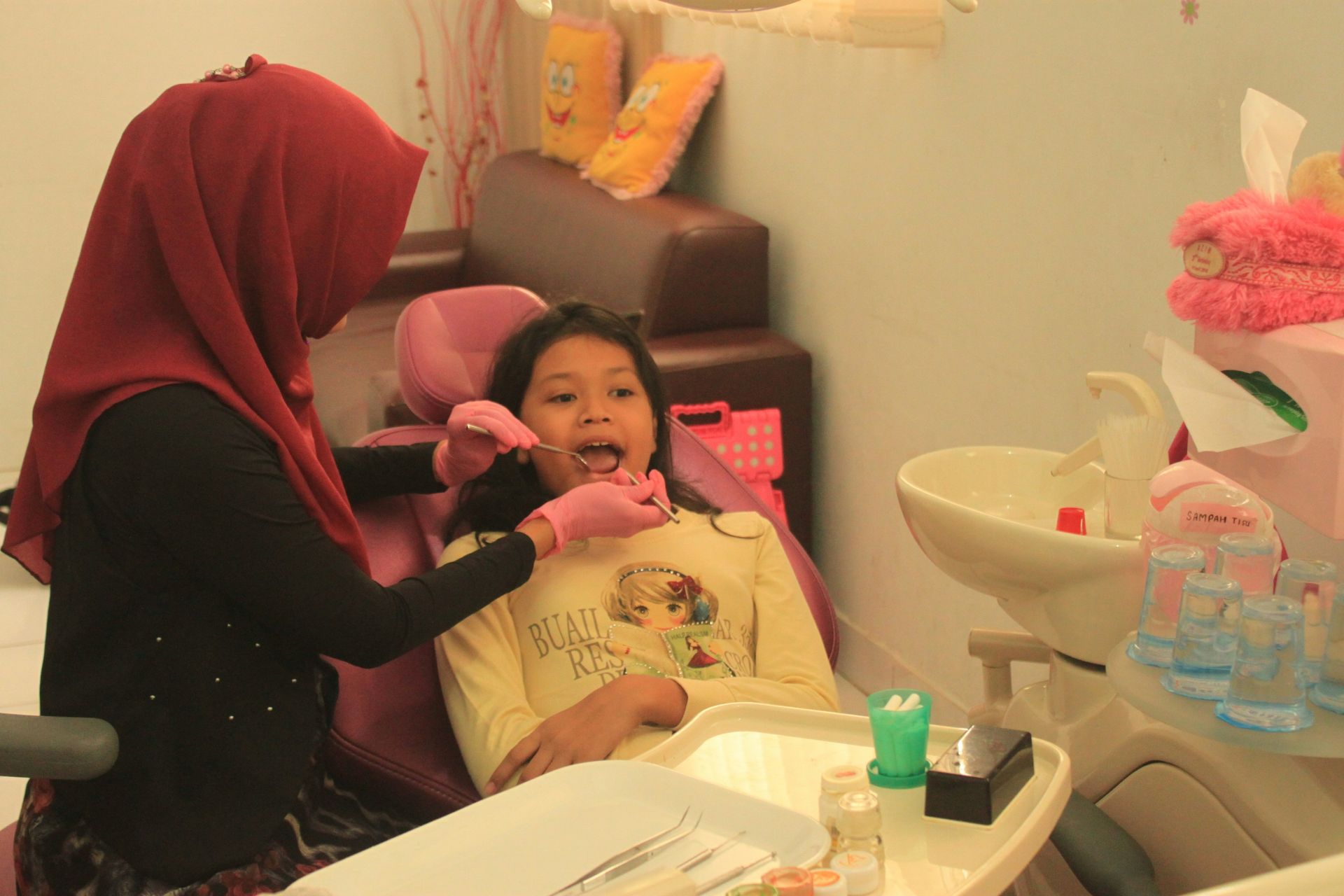
An SLP or MYO provider evaluates:
Rest posture
Breathing patterns
Tongue mobility
Palatal structure
Swallowing mechanics
Jaw stability
Oral habits
Nasal airway
2. Foundational Skills
Building:
Nasal breathing
Lip seal
Correct head and neck posture
Adequate lingual strength
3. Tongue Elevation Training
Practicing:
Lingual-palatal suction
Tongue tip, middle, and back elevation
Coordination with breathing
4. Swallow Training
Teaching:
Correct tongue placement
Sequential oral-motor control
Efficient bolus handling
5. Habit Elimination and Integration
Supporting:
Thumb sucking elimination
Pacifier weaning
Replacing mouth-breathing patterns
6. Homework and Daily Habits
Small daily practice builds neuromuscular change.
A full MYO program typically lasts 3–12 months, depending on needs.
How Do Parents Know if Their Child Might Benefit From MYO?
Here are common red flags: 
Mouth always hangs open
Snoring or restless sleep
Drooling past age 3
Tongue sits low or forward
Lisp or unclear articulation
Difficulty chewing or picky eating
Frequent choking on saliva or food
Messy or inefficient eating
Orthodontic concerns
Tongue tie diagnosis or suspicion
Chronic allergies or congestion
Tongue pushing against teeth
Hard time keeping lips closed
If you see several of these signs, an SLP evaluation—including a myofunctional screening—is recommended.
The Bottom Line: Resting Tongue Position Is Foundational—MYO Helps Rebuild It
Resting tongue posture affects speech clarity, feeding skills, dental growth, airway health, and even sleep. It is one of the most overlooked but most important components of a child’s oral development.
Myofunctional therapy is not a trend—it is a science-backed, functional, interdisciplinary approach that is helping children achieve long-term improvements in:
Speech production
Feeding efficiency
Breathing and sleep
Oral development
Whole-body wellness
This is why SLPs are increasingly referring for MYO and incorporating these principles into therapy.
Parents, clinicians, and medical providers who understand the power of resting tongue posture can catch concerns early, intervene more effectively, and support children in building lifelong healthy patterns.